
Loading...
Serving Parkland, FL and surrounding areas. (754) 294-8165
Bare concrete does not survive heavy traffic, chemical spills, or Florida's humidity for long. We install commercial-grade epoxy systems that protect your slab and keep your space looking professional - with licensed work and a clear schedule so your business is not offline any longer than necessary.
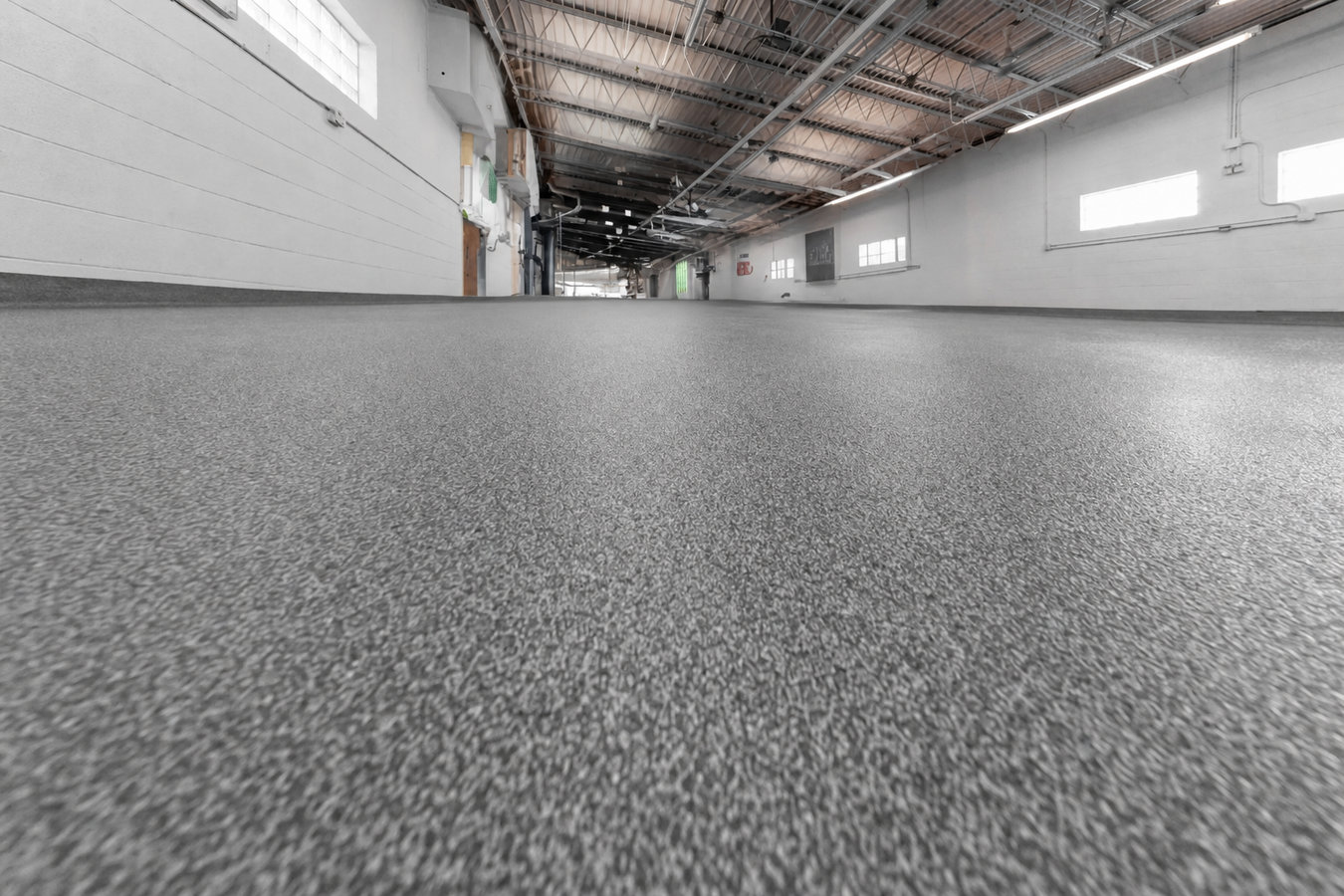
Commercial and industrial epoxy floor coatings in Parkland, FL are thick, protective systems applied directly over existing concrete - most commercial projects run two to four days depending on floor size and prep requirements, after which the space is sealed, smooth, and far easier to maintain than bare concrete ever was.
Business owners in Broward County most often ask about commercial epoxy for warehouses, retail showrooms, auto service bays, light-manufacturing floors, and medical or food-service spaces. The common thread is a floor that handles spills, heavy traffic, and humidity without degrading. If the space is primarily a garage or residential workshop, our garage floor coatings service covers those applications in more detail.
Florida's climate creates specific challenges for commercial floors that contractors in drier states do not deal with. The water table in Parkland is shallow, humidity regularly exceeds 75 percent even in the dry season, and the wet season brings conditions that can destroy a coating applied without proper moisture management. We test every slab before anything goes down, and we schedule work with curing conditions in mind.
If oil, chemicals, or water soak into your floor instead of sitting on top, the surface has no real protection. Bare concrete is porous, and once it starts absorbing contaminants it becomes harder to clean and easier to damage structurally. An epoxy coating seals the surface so spills stay on top where you can wipe them up quickly.
White patches or bubbling on a previously coated floor mean moisture is pushing up through the slab from below - a very common problem in Parkland and across Broward County given the shallow water table here. The existing coating has failed and needs to be stripped and reapplied with proper moisture management. Ignoring it only makes the problem larger and more expensive.
Concrete that has not been sealed sheds a fine dust called efflorescence - the concrete slowly breaking down. You will notice it as a grayish film on equipment, shelving, or anything sitting on the floor. A properly applied epoxy coating stops this entirely and makes the space dramatically easier to maintain.
If your floor has taken years of forklift traffic, dropped equipment, or chemical exposure, the surface will show it. Cracks and rough patches are not just cosmetic - they collect bacteria, trap moisture, and can become trip hazards in a busy workspace. Epoxy coating applied after proper repairs restores a smooth, safe, and professional-looking surface.
For most commercial spaces, we start with a high-build epoxy base coat - thicker than residential systems and formulated to handle vehicle loads, chemical exposure, and constant foot traffic. On top of that we apply the finish layer suited to the space: a solid color for a clean, uniform look, a flake or quartz broadcast for added texture and slip resistance, or a clear topcoat where the goal is protection over appearance. For facilities that need maximum chemical resistance - food processing, automotive, or light manufacturing - we also install urethane cement flooring, which holds up to thermal shock and aggressive cleaning agents that standard epoxy cannot tolerate.
Every system we install begins with mechanical grinding and a moisture test. No shortcuts on prep - because a commercial floor that fails six months after installation costs you far more than the original job did.
Warehouses, showrooms, and utility spaces where durability and easy cleaning matter more than decorative finish.
Auto service bays, loading areas, and any commercial floor where slip-and-fall risk is a liability concern.
Spaces exposed to oils, solvents, cleaning chemicals, or food processing fluids that break down standard epoxy over time.
Commercial floors where a previous epoxy job is peeling or bubbling - stripped, prepped, and done right this time.
Parkland is primarily a residential city, but the Sawgrass Expressway corridor and neighboring Coral Springs and Coconut Creek host a growing mix of warehouse, flex-space, and commercial construction. Business owners operating in this part of Broward County deal with the same climate challenges as homeowners - shallow water table, year-round humidity above 75 percent, and a rainy season that runs June through September with daily afternoon thunderstorms. Scheduling a large commercial coating job during the dry season (November through April) gives you better curing conditions and more predictable results. OSHA's walking-working surfaces standards set baseline requirements for slip resistance and surface conditions in commercial spaces - anti-slip additives in the coating are an easy way to meet those expectations.
Florida's contractor licensing requirements are also worth mentioning. Florida requires contractors performing commercial flooring work to hold a valid state license through the DBPR, and Broward County may require permits for certain commercial scopes. We serve businesses throughout the corridor, including in Coral Springs, FL and Margate, FL, and we handle all licensing and permit questions upfront so there are no surprises mid-project.
We respond within one business day. A few questions about your space, current floor condition, and business schedule help us give you a realistic timeline and price range before we visit.
We walk the floor, test for moisture, and check for any existing coating that needs to be stripped. You receive a written quote and a day-by-day schedule before we touch anything.
The crew grinds the concrete surface to open it up for bonding, fills any cracks or divots, and applies a moisture-barrier primer if readings require it. This step is the most labor-intensive - and the most important for long-term results.
Epoxy goes down in layers with cure time between each. Light foot traffic is safe after 24 hours, heavy vehicles and equipment after 48 to 72 hours. We walk through the completed floor with you and leave care instructions before we leave.
We respond within one business day and provide a clear day-by-day schedule so you can plan your downtime. No guesswork, no surprise timelines.
(754) 294-8165Florida requires a valid DBPR license for commercial flooring work, and Broward County enforces it. We carry full licensing and insurance and can provide documentation before we ever start. You can verify our license status at myfloridalicense.com in about two minutes - we encourage it.
South Florida's shallow water table means slabs here hold more moisture than slabs in drier states - and an epoxy job applied over a wet slab will fail within months. We test before anything goes down and address whatever the numbers show. That single step is the difference between a floor that lasts and one that does not.
Every commercial project comes with a written day-by-day timeline before work starts. You know exactly when your space will be offline and when it will be back in service - no last-minute delays, no scrambling to reschedule your team. We treat your downtime as seriously as our own.
South Florida's humidity means floors get slick from condensation, rain tracked in, and everyday spills. We include textured broadcast finishes or fine-grit additives that meet OSHA's walking-working surfaces requirements. A safer floor is also a less expensive liability problem to avoid.
These practices add time to every job. We do them because they are the reason our commercial floors hold up through years of real use in one of the most demanding climates in the country. The Concrete Network provides a useful independent overview of what separates quality epoxy work from work that fails early.
Residential garage floor coatings designed for South Florida homes - from single-car garages to oversized spaces being converted into gyms or workshops.
Learn MoreMaximum chemical and thermal resistance for food processing, automotive, and manufacturing floors that face conditions epoxy alone cannot handle.
Learn MoreThe dry season runs November through April - prime time for commercial epoxy work in Broward County. Contact us today and we will respond within one business day.